
Parenthood may be a popular cinematic topic, however films specifically about offspring are few and far between. Although newborns often provide the dramatic and comedic impetus for a fictional feature, and sometimes earn titular status, their standing as the protagonists in a film is particularly rare. Whilst the likes of Junior, The Hand That Rocks The Cradle, Jack & Sarah and Waitress revolve around their impact upon adults, and Rosemary’s Baby, Baby Boom, Three Men And A Baby and Baby Mama reference their existence in nominal form, none elevate infants to the top spot. Other than the underwhelming Look Who’s Talking series, the Baby’s Day Out caper and attempted quirkiness of Baby Geniuses, babies are best served by the documentary genre, with French effort Babies (Bébé(s)) the latest factual offering to explore the formative stages of human life.

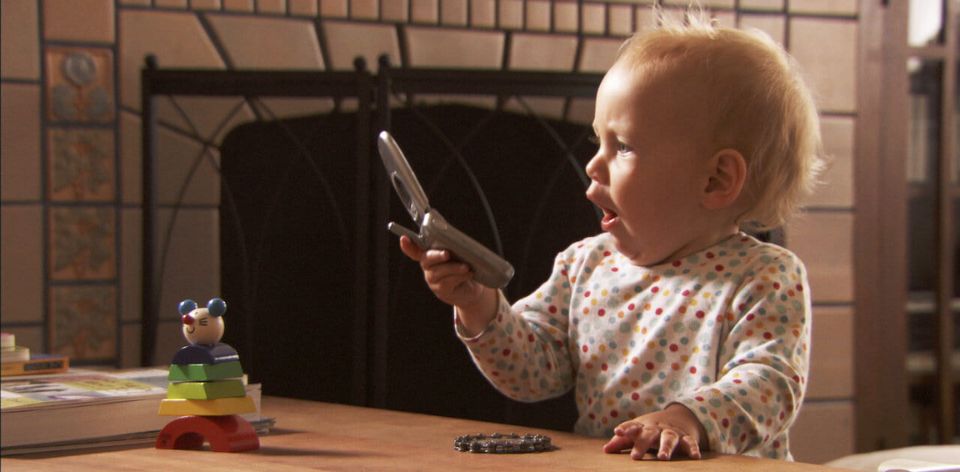
Tracking the first twelve months of existence of four infants from different corners of the globe, Babies follows the exploits of Ponijao from Opuwo, Namibia, Bayar from Bayanchandmani, Mongolia, Mari from Tokyo, Japan, and Hattie from San Francisco, USA. As they enter the world, open their eyes, crawl, and attempt to walk and talk, documentarian Thomas Balmès (How Much Is Your Life Worth?) captures and compares their every move whilst providing a passive commentary on the disparity of culture and the universality of the childhood experience.
The are about 490,000 babies born around the world every day, or to put it another way, about 340 every minute. Despite this staggering figure, versus the decline natural resources that Mother Nature has to provide for its growing brood, the myth of the miracle of childbirth persists. That’s a lot of little miracles happening every day, all around the world. This wide-eyed fascination with life begetting life seems to be the premise upon which Thomas Balmès has based his observational documentaries Babies.
Taking an approach that recalls the ‘many cultures one world’ approach of Ron Fricke’s Baraka or Godfrey Reggio’s Koyaanisqatsi, the four children chosen are deliberately from different socio-economic backgrounds and cultures. However, the choice of cultures is less than inspiring: while it is fascinating to see how it takes a village to raise a child in Namibia, and the corresponding speed of their development and independence, and the kind of ‘free range child’ in Mongolia, the children in Tokyo and San Francisco respectively don’t seem that far apart. Is this the message behind Balmè’s film: that despite the miles and cultural quirks, we all come out of a similar spot and approach the world with the same wide-eyed fascination? Or is it simply that some kids get it better than others?
This brings us to the crux of the problem with Babies (the film, not the cute little tykes it depicts). Beyond the obvious commonalities and differences that can be gleaned from this simple empirical study of the differing behavioural patterns of mothers and children on various continents, the lack of a strong narrative voice in the documentary makes it difficult to glean anything deeper than this. The children shown are undoubtedly cute, and the unprecedented access it offers to the African and Mongolian mothers in particular will no doubt elicit the majority of the audience reaction. The Mongolian child in particular has a few near misses with all manner of horned and clawed animal and emerges unscathed, and by comparison the overly pampered American child careens off a playground in a toy car operated by its parent.
Yet here are videos as amusing or insightful as this on YouTube and, as if to prove that point, almost every child has a cat to play with. It’s video sharing gold, although a number of sequences seems staged, or at least prepared in advance. Even at the slimmest of running times, Babies overstays its welcome by at least half-an-hour. This would have made for an ideal National Geographic special, but it simply doesn’t add enough to the global narrative to warrant a feature.

The Reel Bits: Although incredibly well shot and beautifully choreographed, Babies doesn’t offer much insight beyond our existing knowledge of the universal cuteness of infants around the world. While Balmè offers a well observed level of detail about the human condition, a lack of a clear voice and overt cuteness negates much of this point.
Babies was released on May 5, 2011 in Australia by Madman Entertainment.